


Social media gives brands more ways to connect with their audiences, but every platform encourages people to consume content differently. The way someone engages with a LinkedIn article is unlikely to mirror how they respond to an Instagram Reel, a TikTok video, or a post on X.
That difference presents a valuable opportunity. Rather than creating separate campaigns for every channel, businesses can build a multi-format content plan around one central idea, adapting it to suit each platform while maintaining a consistent message. When approached strategically, a single piece of content can become the foundation for weeks of meaningful engagement across your social media channels.
The business case for multi-platform social media content
The strength of a multi-format content plan lies in its ability to extend the life of every marketing asset. One strong piece of content becomes the starting point for a wider conversation, with each platform adding a different perspective rather than repeating the same message.
A report might inspire thought leadership on LinkedIn, short video explainers for Instagram and TikTok, key statistics for X, and visual summaries for Facebook. Each format has a distinct role, yet every piece contributes to the same campaign objective.
This approach creates a stronger, more recognisable brand presence. Audiences experience consistent messaging across multiple touchpoints, while marketing teams spend less time recreating content that already exists.
How one idea can become weeks of content
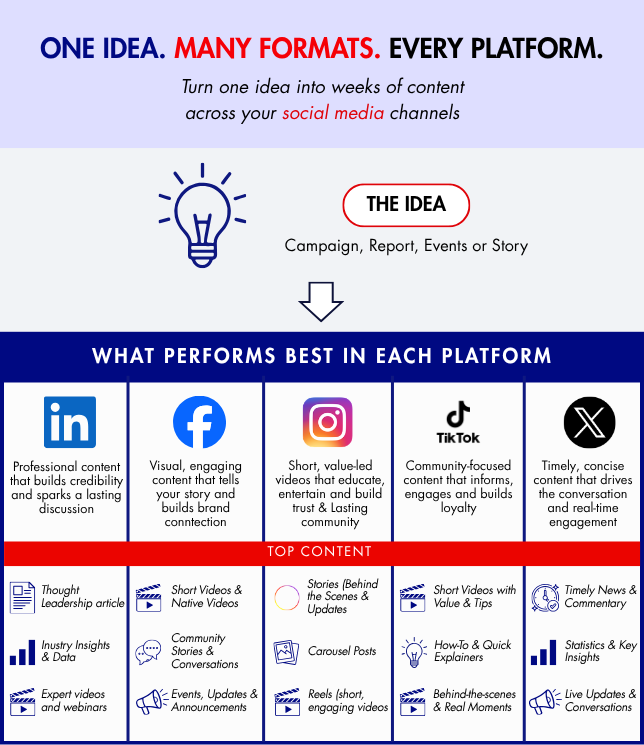
No two social media platforms reward the same type of content. While your message should remain consistent, the way you present it should reflect how people use each channel.
A single campaign, article or event can be adapted in multiple ways.
LinkedIn: authority and professional engagement
Ideal for building credibility, sharing expertise and starting professional conversations.
- Repurpose blogs and reports into thought leadership posts.
- Publish articles, newsletters and industry insights.
- Share company updates, case studies and event highlights.
- Encourage discussion through polls, questions and employee advocacy.
Facebook and Instagram: consistency and visual storytelling
Instagram is a visual platform where storytelling, personality and brand identity take centre stage.
- Turn key messages into Reels and carousel posts.
- Use Stories for behind-the-scenes and real-time updates.
- Share customer stories, campaigns and company culture.
- Keep visuals and messaging consistent to strengthen brand recognition.
Facebook builds a lasting community by storytelling and keeping audiences informed.
- Share news, events and company updates.
- Repurpose articles into engaging summaries.
- Use photos and videos to encourage conversation.
- Highlight customer stories and community engagement.
TikTok: value-led short-form video
Short-form video works best when it is informative, engaging, trendy, and authentic.
- Repurpose webinars and events into bite-sized clips.
- Answer common questions with quick explainer videos.
- Share tips, trends and expert insights.
- Focus on value first, with promotion coming second.
X: speed, commentary, and live momentum
X is best used for timely updates, industry conversations and live engagement.
- Share news, announcements and campaign updates.
- Cover events with live posts and threaded content.
- Join relevant industry discussions.
- Engage with partners, customers and industry voices to broaden your reach.
Why format strategy matters more than volume
A well-planned content strategy starts long before the first post is published. Rather than asking, “What should we share on LinkedIn today?”, successful teams begin with a bigger question: “How many ways can we tell this story?”
From there, one central idea can be adapted into a range of formats, each designed to suit a different platform and audience.
- Core asset: A campaign, event, report, announcement or customer story.
- Content formats: Articles, videos, carousel posts, Stories, graphics and short-form content.
- Platform delivery: Tailored captions, visuals, hashtags and calls to action for each social channel.
Working this way brings greater structure to content planning, helping teams publish with purpose rather than simply filling a content calendar.
Where AI fits into your content workflow
AI has become a valuable tool for extending the life of content. From turning a blog into a series of social posts to adapting webinar highlights for LinkedIn, Instagram or TikTok, it can help marketing teams create multiple versions of the same message in a fraction of the time.
AI’s value depends on the strategy behind it. When supported by clear brand guidelines, channel objectives and a well-planned content framework, AI helps streamline production while keeping content consistent, relevant and aligned with your wider marketing goals.
Making every piece of content count
The most effective social media strategies are built around quality, consistency and thoughtful planning rather than a constant stream of new ideas. When every campaign is designed to work across multiple formats and platforms, content delivers greater value and continues to engage audiences long after it is first published.
For teams looking to strengthen their approach, our Social Media Marketing Creating Engaging Content course covers everything from channel-specific planning and content repurposing to platform best practice, AI-supported workflows and performance measurement, helping marketers create content that works harder across every social channel.
Pam Luo