


Supply chain risk management is often discussed as a reporting exercise, but disruption usually exposes whether an organisation truly understands its dependencies. A risk register may list supplier issues, transport delays or systems outages, yet many managers still struggle to answer a basic question: if a critical supplier failed tomorrow, what would stop, how fast would the impact spread, and how quickly could operations recover?
For UK organisations in 2026, that question sits in a wider resilience context shaped by inflationary pressure, cyber threats, geopolitical uncertainty, labour availability and transport disruption. Evidence from the Office for National Statistics, policy guidance on GOV.UK, the Global Supply Chains foresight report on risk and resilience, updates from the Department for Business and Trade, analysis from the Bank of England, resilience work led by the Cabinet Office and supply chain cyber guidance from the National Cyber Security Centre all point in the same direction: resilience depends on visibility, preparation and disciplined decision-making.
Why supply chain risk management needs more than a risk register
A conventional risk register is useful, but it rarely shows the full shape of operational exposure. It may identify a vulnerable supplier without revealing whether that supplier supports several product lines, relies on a single depot, uses specialist software or depends on a fragile sub-tier network.
Effective supply chain risk management looks beyond named suppliers and asks where dependency actually sits. In practice, exposure often concentrates in places that are not obvious from contract lists alone:
- single-source materials or components
- exclusive logistics routes or ports
- specialist machinery, tooling or technical knowledge
- third-party platforms that support ordering, forecasting or inventory visibility
- cyber dependencies across suppliers and service providers
If those dependencies are not mapped, leaders may overestimate resilience and underestimate recovery time.
Start with the questions that matter most
Managers do not need a perfect model on day one. They do need a structured set of questions that reveal where disruption would hurt most.
1. What are we truly dependent on?
List the products, services, technologies and logistics arrangements that are essential to day-to-day delivery. Then separate routine suppliers from critical dependencies. A supplier is critical if its failure would stop operations, breach customer commitments, create regulatory exposure or materially damage revenue.
2. Where are the single points of failure?
Single points of failure are not limited to one supplier. They can include one warehouse, one shipping route, one software platform, one small technical team or one imported input with no approved substitute. The Government Office for Science foresight work is useful here because it encourages organisations to think in systems rather than isolated transactions.
3. What would stop first if disruption occurred?
Trace the immediate operational effects of failure. Would production stop within hours? Would customer service lose visibility? Would inbound goods clear customs but fail final delivery? This step turns abstract risk into business impact.
4. How quickly could we recover?
Recovery is often harder than escalation plans suggest. Alternative suppliers may exist, but not at the right specification, volume or lead time. Systems data may not be portable. Contractual rights may not secure practical capacity. The realistic recovery window should be tested, not assumed.
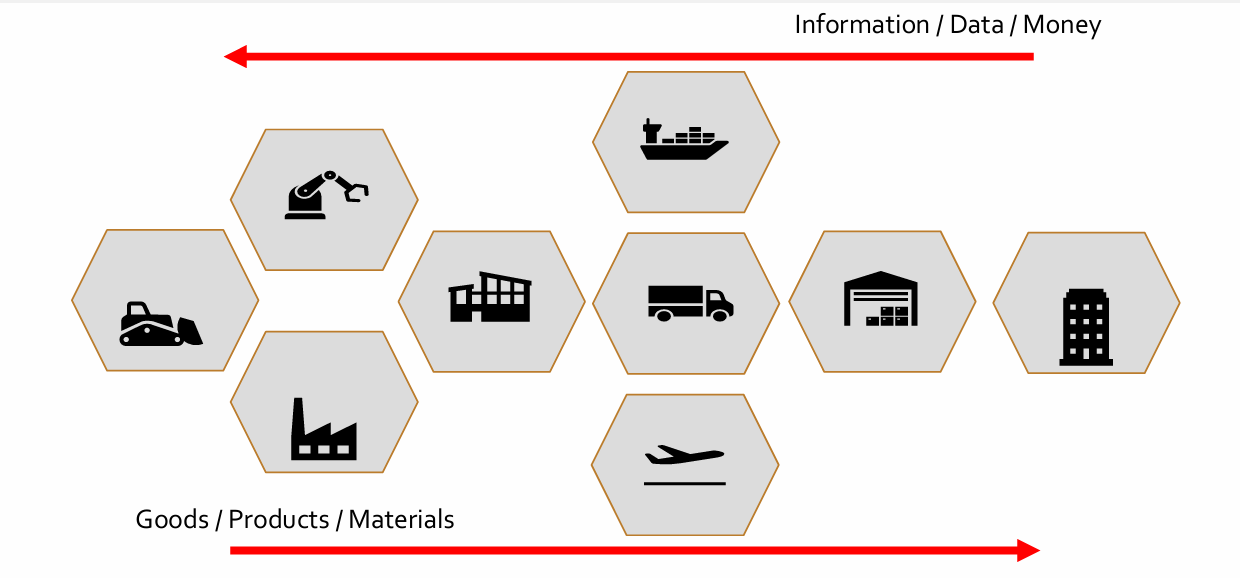
Supply Chain Mapping
A practical framework for supply chain risk management
A strong response follows a clear sequence: identify, analyse, evaluate, mitigate and monitor.
Identify
Map critical suppliers, sub-tier dependencies where visible, logistics routes, inventory constraints and technology enablers. Include internal dependencies such as key people, approvals and operational know-how.
Analyse
Assess how disruption would spread. Consider operational, financial, legal, customer and cyber impacts. The National Cyber Security Centre is particularly relevant where suppliers connect to systems, data or cloud services.
Evaluate
Prioritise risks by combining likelihood with consequence and recovery difficulty. A low-frequency event may still rank highly if it would halt a core operation and take weeks to resolve.
Mitigate
Choose proportionate actions. These may include dual sourcing, buffer stock for genuinely critical items, route diversification, stronger supplier assurance, clearer contractual obligations, tabletop exercises and incident playbooks.
Monitor
Exposure changes constantly. Supplier ownership, freight conditions, cyber posture and macroeconomic pressure all move over time. Monitoring should therefore combine internal reporting with external signals from sources such as the Office for National Statistics, the Bank of England and relevant updates on Department for Business and Trade guidance.
Common weaknesses UK managers should test now
Many organisations discover the same weaknesses when they move from documentation to live testing:
- critical suppliers are known, but sub-tier concentration is not
- alternative suppliers have been identified, but not qualified
- business continuity plans exist, but have not been exercised
- cyber exposure through suppliers is not linked to operational risk
- ownership of supply chain decisions is split across procurement, operations and finance without a single escalation view
The Cabinet Office resilience agenda and wider GOV.UK guidance both support a more joined-up approach. The lesson is straightforward: resilience improves when organisations connect procurement, operational continuity, cyber security and leadership decision-making.
From awareness to a structured response
The organisations that cope best with disruption are rarely the ones with the longest risk lists. They are the ones that can see dependencies clearly, decide priorities quickly and act against a tested plan. That capability can be built.
If your team cannot yet explain what would happen after the loss of a key supplier, now is the time to strengthen supply chain risk management. Start by mapping critical dependencies, testing single points of failure and validating recovery assumptions with realistic scenarios. Then formalise the process through identify, analyse, evaluate, mitigate and monitor. For managers who want a practical framework they can apply immediately, structured training can help turn risk awareness into better operational decisions.