


⌛ Read time: 5 minutes

Organisations across some of the UK’s fastest-growing sectors, including construction, finance, insurance, technology, and infrastructure, are operating in a business environment shaped by economic pressure, regulatory change, technological disruption, and rising expectations around sustainability.
The question is no longer “how do we manage?” but “how do we lead?”
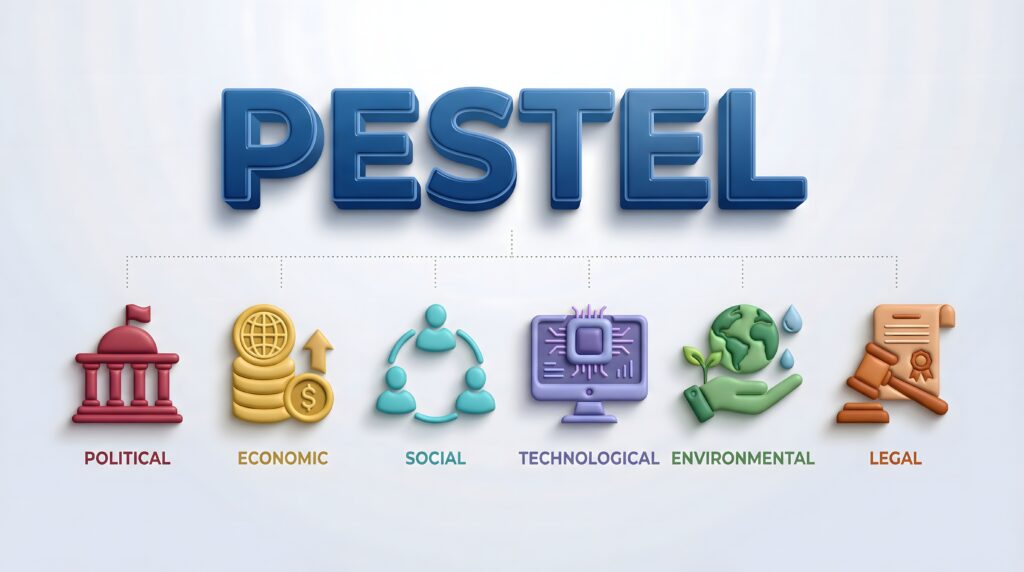
Across the UK economy, successful leaders are those who understand how external forces influence commercial outcomes and translate those pressures into a clear internal strategy. Many executives use the PESTLE perspective to assess these influences, considering the political, economic, social, technological, legal, and environmental factors that increasingly shape financial performance and strategic direction.
Political Stability and Policy Direction
Government policy continues to shape how UK industries grow, invest, and compete. Political decisions surrounding infrastructure spending, planning reform, energy strategy, and financial regulation influence capital allocation, project viability, and long-term business planning.
Legislation such as the Economic Crime and Corporate Transparency Act 2023 reflects the increasing financial scrutiny placed on organisations and their leadership teams. The Act introduces enhanced powers for Companies House, tighter identity verification requirements, and stronger safeguards designed to prevent corporate fraud and misuse of company structures.
For professionals moving into director roles, understanding governance obligations and regulatory risk is essential. Strong governance protects organisational reputation, supports investor confidence, and safeguards financial stability.
Economic Pressures and Strategic Resilience
Although inflation is stabilising and may move closer to the Bank of England’s two per cent target, the wider economic environment remains uncertain. Geopolitical tensions, including conflict in the Middle East, continue to create volatility in energy markets, supply chains, and global investment flows.
For organisations across the UK economy, the financial implications are clear. While inflation may have cooled, the cost of doing business remains high. Energy costs, wage pressures, and supply chain disruption continue to tighten margins, while investors expect sustainable growth and clients demand greater efficiency.
Directors must therefore balance financial discipline with strategic investment. Decisions around capital allocation, operational efficiency, and market expansion now require both commercial awareness and strategic foresight.
Social Change and the Technology Shift
The UK workforce is also evolving. Many businesses continue to face skills shortages, particularly in technical and engineering roles, while professionals increasingly expect meaningful career development, transparent leadership, and supportive workplace cultures.
For organisations, these social shifts carry clear financial implications. Talent shortages can constrain productivity, increase recruitment costs, and limit organisational growth.
Alongside these workforce changes, technology is reshaping how businesses operate and compete. Artificial intelligence, automation, and advanced data analytics are transforming operational efficiency, risk management, and strategic decision-making.
Leaders who invest in digital capability and professional development strengthen their organisation’s long-term competitiveness. For future directors, understanding the financial and operational impact of technological transformation is now a critical leadership skill.
Governance and Legal Responsibility
The legal environment for UK organisations continues to evolve. Data protection legislation, financial regulation, environmental standards, and workplace safety requirements all demand strong leadership oversight.
For directors, governance is no longer simply about compliance. It is about protecting enterprise value, ensuring transparency, and maintaining stakeholder trust.
Strong governance frameworks support better financial oversight, clearer strategic accountability, and more effective risk management. Organisations that prioritise ethical leadership and robust decision-making processes build stronger relationships with regulators, investors, and employees.
Environmental Responsibility and the Net Zero Transition
Environmental considerations are now central to long-term business strategy. The UK’s commitment to achieving net zero emissions is influencing investment decisions, infrastructure development, and corporate planning across organisations.
Construction firms are adopting sustainable building methods, while financial institutions are integrating environmental risk into lending and investment strategies. Renewable energy and green infrastructure are emerging as major drivers of economic growth.
For business leaders, sustainability is no longer solely an environmental issue. It is increasingly linked to financial performance, investor confidence, and long-term organisational resilience.
Developing the Next Generation of Directors
As the external business environment becomes more complex, leadership development has never been more important.
The Directors Accelerator Programme is designed to support experienced professionals who are preparing for director-level responsibility or strengthening their strategic leadership capability.
Director Development Accelerator Programme
Participants gain a deeper understanding of directors’ responsibilities under the Companies Act 2006, learn to interpret financial statements, and develop strategic thinking tools to support effective decision-making at the board level.
Learning Outcomes
- Understand the Responsibilities of Directors and the Board
- Analyse the Companies Act 2006 and other Legal Frameworks
- Master Tools for Monitoring, Evaluating and Re-Thinking Strategy
- Interpret Financial Statements and Assess Financial Performance
- Be able to develop a Marketing Strategy and measure its Success
- Identify Your Leadership Style and Understand Different Management Approaches
- Analyse Good Practices for Coaching and Mentoring Schemes
This course suits your schedule:
To suit a busy diary, the course follows a flexible 3+2 day structure, giving you full control over the dates that suit you best.
The Next Generation of UK Leaders
The future success of British sectors will depend on the quality of leadership guiding organisations through change.
As economic conditions shift, technology advances, and environmental expectations grow, leaders must remain adaptable, informed, and strategically focused.
In an increasingly complex business environment, strong leadership is no longer simply an advantage. It is a fundamental requirement for sustainable growth.
Najma Mohamed